
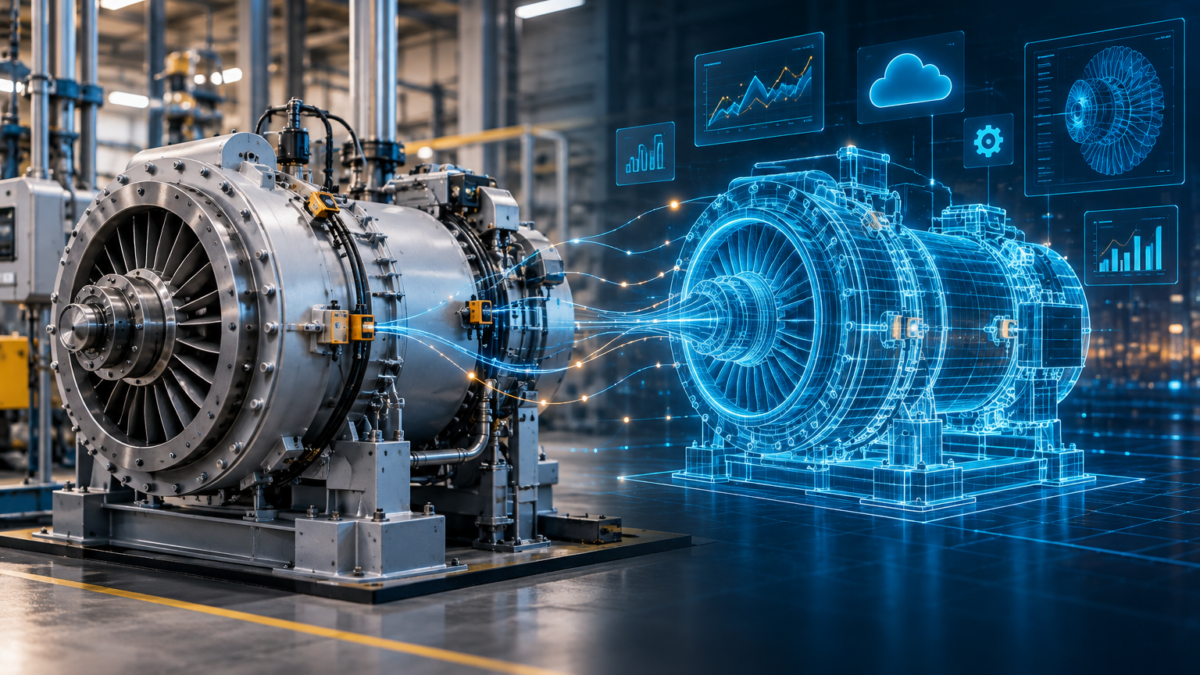
Imagine being able to inspect a factory machine, test changes to a building or predict when an industrial component might fail—without first making changes to the physical asset.
That is the basic idea behind a digital twin.
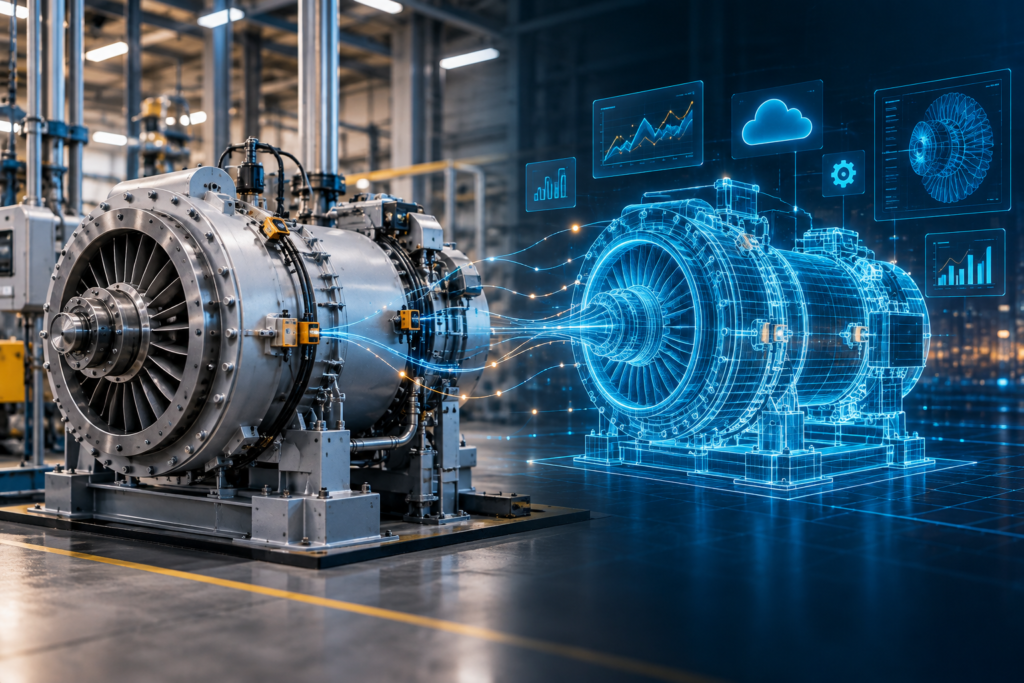
Digital twins connect the physical and digital worlds by creating virtual representations of real-world assets, systems or processes. Unlike a conventional 3D model, a digital twin can use data from its real-world counterpart to reflect changing conditions and support monitoring, simulation and decision-making.
As sensors, Internet of Things (IoT) devices, cloud computing and artificial intelligence become more capable, digital twins are finding applications far beyond manufacturing. They are being explored and deployed across aerospace, energy, healthcare, transportation, infrastructure and smart cities.
But what exactly makes something a digital twin, and why are businesses investing in the technology?
What Is a Digital Twin?
A digital twin is a digital representation of a real-world entity or system.
The physical counterpart could be something relatively small, such as a pump or motor, or something much larger, such as an aircraft, factory, power network or building.
What makes the concept particularly useful is the connection between the digital representation and data about the real system.
Sensors and connected systems can collect information such as:
- Temperature
- Pressure
- Vibration
- Energy consumption
- Location
- Equipment status
- Environmental conditions
- Overall performance
That information can be processed and reflected in the digital model.
Engineers and operators can then use the model to understand current conditions, investigate problems, simulate scenarios and, in some applications, predict what could happen next.
A digital twin therefore isn’t simply another name for a 3D model.
A 3D model primarily describes how something looks or is constructed. A digital twin can combine models with operational data, simulation and analytics to represent aspects of how the real-world system is behaving.
From Models to Connected Digital Twins
The technologies behind digital twins did not appear overnight.
Engineers have used computer-aided design (CAD), simulation and mathematical models for decades. These tools allow teams to design products and test ideas before creating expensive physical prototypes.
The major change has been connectivity.
IoT sensors, cloud and edge computing, faster data processing and increasingly sophisticated analytics make it possible to connect models more closely with operational systems.
Instead of examining only a static representation of a machine, for example, an organization can potentially combine the model with sensor readings collected while that machine is operating.
The result is a digital representation that can evolve alongside the system it represents.
NASA provides an interesting historical example. The agency describes Apollo-era simulators and vehicle models—particularly their use following the Apollo 13 accident—as important predecessors to today’s digital-twin approach. Modern NASA projects continue to use high-fidelity models and digital twins for testing and monitoring complex spacecraft systems.
How Does a Digital Twin Work?
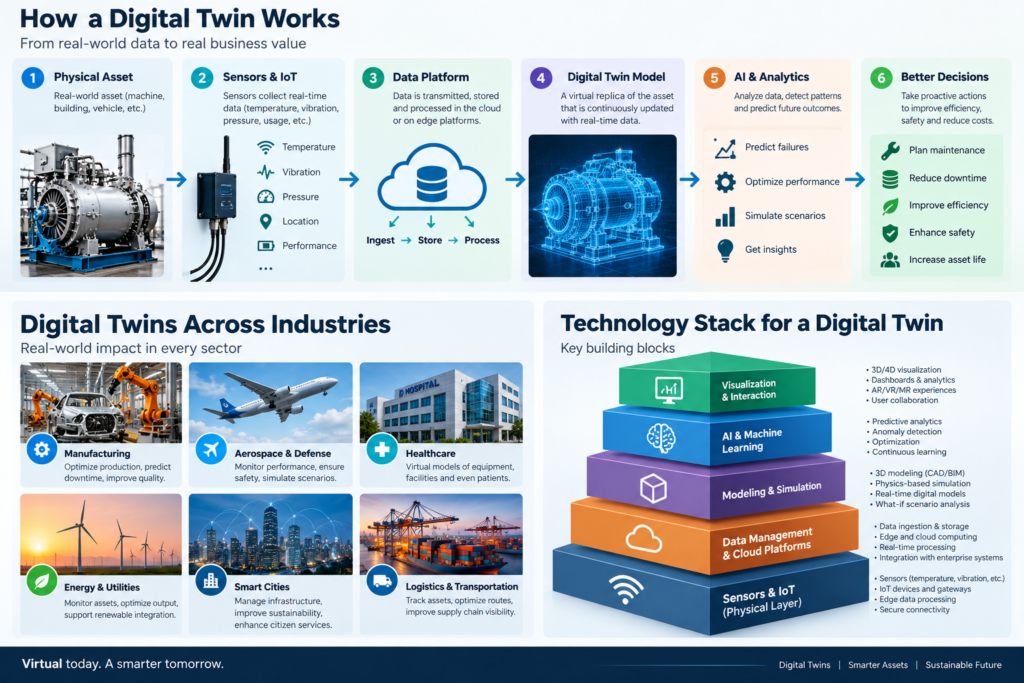
There is no single architecture used by every digital twin. The implementation depends on the asset, industry and problem being solved.
However, many systems follow a similar flow.
1. Physical Asset
Everything begins with the real-world object or system.
It might be a manufacturing machine, turbine, vehicle, building, medical device or piece of infrastructure.
2. Sensors and IoT Devices
Sensors collect information about the asset and its environment.
For an industrial machine, this might include vibration, temperature, pressure and power consumption.
3. Data Platform
The collected information must be transmitted, stored, cleaned and processed.
Depending on the application, organizations may use edge computing, cloud platforms or a combination of the two.
4. Digital Model
Software models relevant characteristics and behaviour of the physical system.
The sophistication of this model can vary considerably. Some digital twins focus on a few operating variables, while others combine detailed engineering models, simulations and large amounts of operational data.
5. Analytics and AI
Analytics can turn the collected information into useful insights.
Machine-learning systems may identify unusual behaviour, estimate future conditions or help predict equipment problems.
6. Decisions and Actions
The ultimate purpose isn’t simply to create an impressive virtual model.
It is to make the information useful.
Teams might use digital-twin insights to schedule maintenance, optimize equipment settings, test operational changes or investigate a problem without immediately interfering with the physical system.
The Technology Behind Digital Twins
Digital twins usually depend on several technologies working together.
Sensors and IoT
Sensors provide the connection between physical equipment and digital systems.
Without reliable operational data, a digital twin may be little more than a simulation or static model.
Edge and Cloud Computing
Not every piece of sensor data should travel to a distant cloud server before being processed.
Edge computing allows some information to be processed close to the equipment, which can reduce latency.
Cloud platforms, meanwhile, provide scalable computing and storage for larger datasets, analytics and applications.
Modeling and Simulation
Engineering and simulation software helps reproduce important characteristics of the real system.
Depending on the application, this might involve 3D models, physics-based simulation, mathematical models or combinations of several approaches.
Artificial Intelligence and Machine Learning
AI can enhance a digital twin by detecting patterns that would be difficult to identify manually.
Possible applications include:
- Anomaly detection
- Predictive maintenance
- Performance optimization
- Forecasting
- Scenario analysis
- Decision support
The important distinction is that AI doesn’t replace the underlying digital twin. It can become another analytical layer within the overall system.
Visualization
Dashboards, 3D environments, augmented reality (AR) and virtual reality (VR) can help people interact with digital-twin information.
An engineer, for example, could inspect the virtual representation of a machine while viewing operating data associated with individual components.
Where Are Digital Twins Being Used?
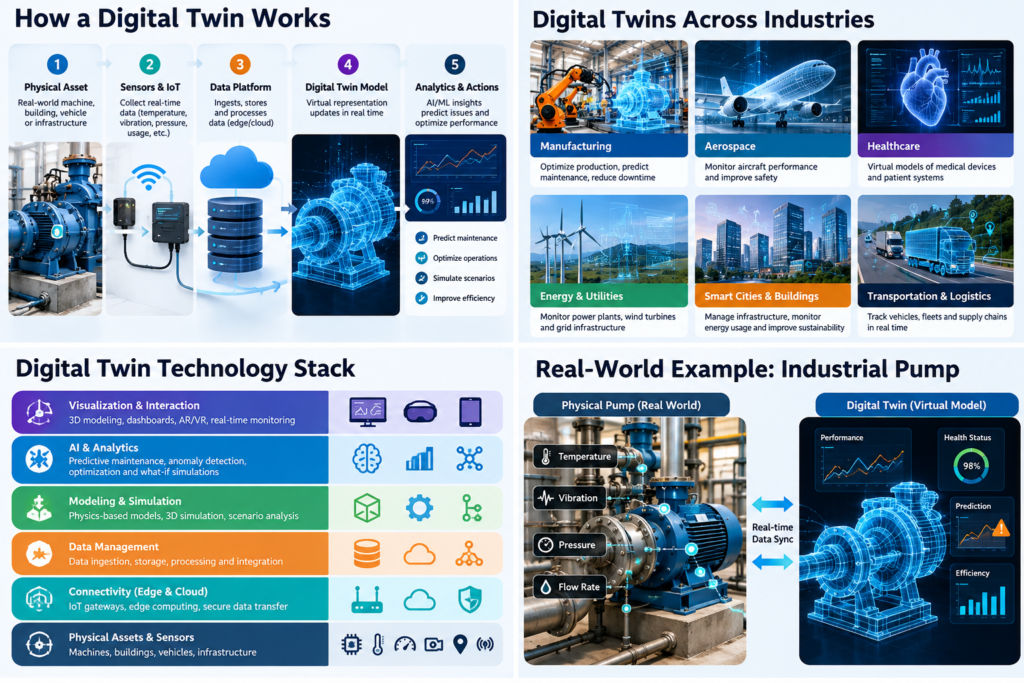
One reason digital-twin technology attracts attention is that the concept can be applied to very different industries.
Manufacturing
Manufacturing remains one of the clearest applications.
A manufacturer can create digital representations of individual machines, production lines or even larger manufacturing systems.
The resulting data and models can support equipment monitoring, predictive maintenance, production planning, virtual commissioning and process optimization.
For example, unusual vibration combined with rising temperature could indicate that a component requires inspection before it causes an unexpected shutdown.
Aerospace
Aircraft and spacecraft contain thousands of components operating under demanding conditions.
Digital models can help engineers monitor systems, analyze performance and simulate conditions that would be expensive or dangerous to reproduce physically.
NASA has used digital-twin approaches in modern space programs as well as high-fidelity modeling techniques with roots extending back to the Apollo era.
Healthcare
Healthcare represents a particularly interesting—and sensitive—area for digital twins.
Researchers and technology companies are exploring virtual representations of medical equipment, organs, physiological systems and patient-specific conditions.
Potential applications include treatment planning, medical-device development and simulation.
However, healthcare applications also introduce significant requirements around validation, patient privacy, data quality, safety and regulatory compliance.
Energy and Utilities
Power-generation equipment, renewable-energy systems and electricity networks generate enormous amounts of operational data.
Digital twins can help operators monitor equipment, understand performance and anticipate maintenance requirements.
A wind-turbine digital twin, for example, could combine operating conditions and sensor readings to help identify abnormal behaviour.
Smart Cities and Buildings
The same principles can be applied at a much larger scale.
Digital representations of buildings, transport infrastructure and urban environments can help planners understand traffic, energy consumption, infrastructure utilisation and environmental conditions.
Instead of changing infrastructure first and measuring the result later, planners can use simulations to explore potential outcomes before implementation.
Transportation and Logistics
Vehicles, warehouses and logistics networks are another natural fit.
Digital twins can potentially help organizations monitor fleets, understand asset utilization, optimize routes and simulate supply-chain scenarios.
Why Are Digital Twins Valuable?
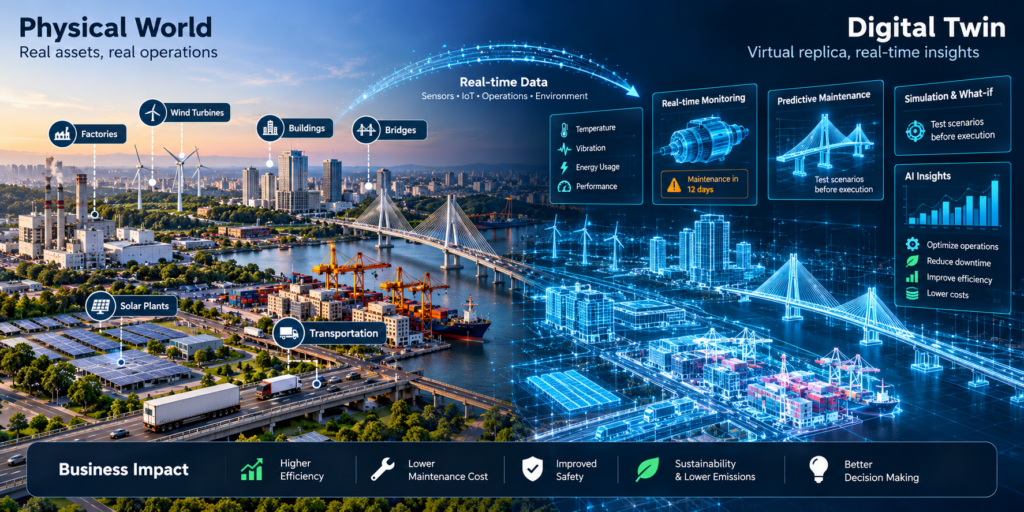
The value of a digital twin doesn’t come from the visualization itself. It comes from what organizations can learn and do with it.
Predictive Maintenance
Traditional maintenance can be reactive: something fails and technicians repair it.
Digital twins can support a more proactive approach.
Sensor data and analytics can identify abnormal operating patterns and help teams investigate potential failures earlier.
Reduced Downtime
Unexpected equipment failure can stop an entire production process.
Better monitoring and earlier detection can help organizations plan maintenance instead of responding to every problem as an emergency.
Better Decision-Making
Digital twins give decision-makers another source of operational information.
Instead of relying only on historical reports, teams can examine current data alongside models and simulations.
Safer Experimentation
Some experiments are expensive, disruptive or dangerous in the physical world.
A digital environment allows engineers to explore certain scenarios without immediately putting equipment, employees or infrastructure at risk.
Of course, a simulation is only as trustworthy as its models and data, so important decisions still require appropriate engineering validation.
Faster Product Development
Virtual models and simulations can help engineers evaluate design alternatives earlier in development.
That can reduce the number of physical prototypes required and reveal potential issues before production.
Resource and Energy Optimization
Digital twins can also help organizations understand how equipment consumes energy and other resources.
That makes the technology relevant not only to cost reduction but also to sustainability initiatives.
Digital Twins Are Not Automatically Accurate
Despite the potential benefits, building a useful digital twin is difficult.
Simply connecting sensors to a 3D model doesn’t guarantee valuable results.
Data Quality
Poor data produces poor conclusions.
Sensors must be correctly calibrated, data must be complete enough for the intended use, and organizations need processes for identifying erroneous measurements.
Cybersecurity
Connecting physical infrastructure with software systems introduces security considerations.
A compromised digital-twin environment could expose sensitive operational information or, depending on how systems are connected, create risks for operational technology.
Security therefore needs to be considered as part of the architecture rather than added at the end.
Integration With Existing Systems
Factories, utilities and infrastructure operators often rely on equipment installed many years ago.
Connecting modern digital-twin platforms with these legacy systems can require specialized hardware, integration software and significant engineering effort.
Interoperability
Digital twins may involve equipment and software from multiple vendors.
Without common data models, interfaces and standards, organizations can end up with isolated digital twins that cannot easily communicate with one another.
Interoperability is therefore becoming increasingly important as companies move from individual digital twins toward connected ecosystems.
Skills
Successful implementations require more than software developers.
They may involve mechanical or electrical engineers, data engineers, domain specialists, cybersecurity teams, simulation experts and AI practitioners.
Understanding the physical system remains just as important as understanding the software.
Cost and Complexity
A sophisticated digital twin can require sensors, networking, data infrastructure, simulation software, cloud resources and specialist expertise.
Organizations therefore need a clear business problem rather than adopting digital twins simply because the technology is fashionable.
What’s Next for Digital Twins?
Digital twins are likely to become more capable as several surrounding technologies mature.
AI-Powered Digital Twins
AI and machine learning will increasingly help digital twins identify patterns, detect anomalies and forecast future conditions.
Generative AI may also make digital-twin systems easier to interact with by allowing users to query operational information using natural language.
Imagine an engineer asking:
“Which machines are showing unusual behaviour compared with the last 30 days?”
Instead of manually navigating multiple dashboards, an AI layer could help retrieve and explain the relevant information.
More Processing at the Edge
For applications requiring rapid responses, processing data near the physical asset can be more practical than sending everything to the cloud.
Edge computing is therefore likely to remain an important part of industrial digital-twin architectures.
Connected Digital-Twin Ecosystems
Today, organizations may build separate digital twins for individual machines or systems.
The next challenge is connecting them.
A factory, for example, might eventually combine twins representing machines, production lines, energy systems and logistics into a larger operational model.
That increases the importance of interoperability and common standards.
Greater Focus on Security and Trust
As digital twins influence increasingly important decisions, organizations need confidence that their models and data are reliable.
Cybersecurity, model validation, data provenance and governance will therefore become even more important.
More Immersive Interfaces
AR, VR and mixed-reality interfaces could provide new ways to interact with digital twins.
A maintenance engineer wearing AR glasses, for example, might view sensor information and maintenance instructions directly over the physical equipment being inspected.
Digital Twins Are About Decisions, Not Just Digital Replicas
The most interesting thing about digital twins isn’t the ability to create a visually impressive virtual machine or city.
It is the connection between physical systems, operational data, models and decisions.
A useful digital twin can help an organization understand what is happening, explore why it is happening and evaluate what might happen next.
That makes the technology relevant to everything from maintaining a single industrial pump to understanding complex factories, aircraft, energy networks and urban infrastructure.
But organizations also need to approach the technology realistically.
Digital twins depend on trustworthy data, appropriate models, secure systems and people who understand the real-world environment being represented.
When those pieces come together, a digital twin becomes much more than a digital copy.
It becomes a tool for understanding and improving the physical world.