
The development of artificial intelligence is at point of no return. Even though weve created programs capable of writing poetry producing art and diagnosing ailments however were with hardware thats fundamentally inefficient.
The current AI models operate on huge data centers which consume the same amount of electricity as smaller countries. To bring AI from the cloud to the devices we use every day like drones smart glasses and medical implants we need the latest type of “brain.”
This is the point where neurons in chips become relevant. In contrast to traditional processors which use strict sequential logic these chips are created to physically replicate the structure of the brain. Through the use of synthetic synapses and neurons they can handle information in manner which is thousand times more efficient than processors in the laptop you are using.
In this guidebook well explore the most powerful neuromorphic chips applications and explain how “brain on chip” technology is set to revolutionize the field of artificial intelligence.
What is Neuromorphic Chip?
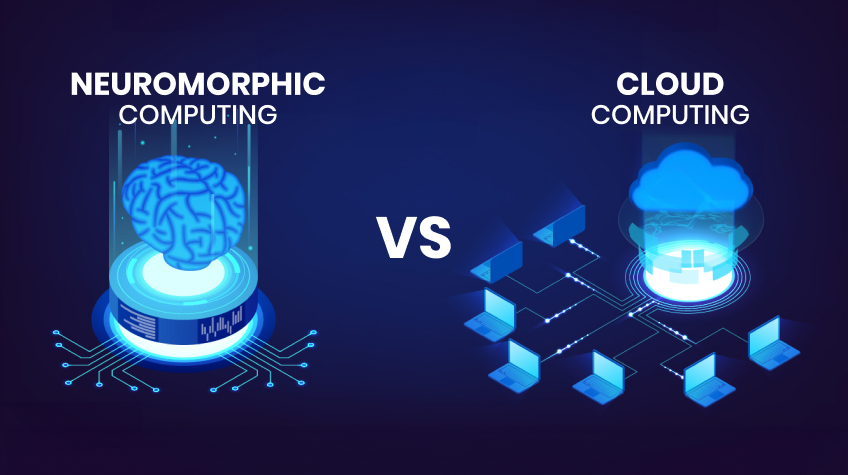
In order to comprehend the functions one must first know what is unique about these chips. The standard computing chip (CPU or GPU) utilizes what is known as “von Neumann architecture” which is separation of the processor and memory. It means that information is always going back and forth which is waste of energy and time called”the “von Neumann bottleneck.”
The neuromorphic chip but it colocates memory as well as processing.
- Artificial Neurons They function as processors similar to neurons found in your brain.
- Artificial Synapses These are the memory for the computer which stores data right in the place where processing takes place.
- Event driven (Spiking): Traditional chips are constantly “on” consuming power all the time. Neuromorphic chips will only “fire” or consume power whenever they get signals (a”spike”). In the absence of any signal it remains silent and is able to conserve energy.
1. Autonomous Vehicles and Drones
One of the most crucial neuromorphic chips applications are in the area of autonomous transportation. Autonomous vehicles and drones are basically machines that have to see world that is chaotic at time.
Real Time Obstacle Avoidance
Self driving cars that is equipped with conventional GPUs has to analyze millions of pixels each second in order to recognize an individual pedestrian or stop signal. It creates “latency” delay that could be dangerous in split second situation. Neuromorphic chips process data in continuous stream. They do not look at the entire image continuously They only look at only the portions of the picture which alter for example an e bike moving or changing traffic lights. It results in near instantaneous response time.
Energy Efficient Drones
Drones have limited batteries. heavy powerful AI processor cuts their flight duration significantly. Neuromorphic processors like Intels Loihi allow drones to complete difficult tasks such as “slam” (simultaneous localization and mapping) in fraction power and extend their capabilities from minutes to several hours.
- Principal Benefits: Ultra low latency for crucial safety reasons.
- The main benefit: Significant reduction in the drain on mobile batteries.
2. Advanced Robotics and Industrial Automation
In manufacturing and logistics robots are becoming “cobots” collaborative robots that work alongside humans. This demands degree of intelligence in the senses that traditional chips are unable to offer effectively.
Adaptive Learning on the Fly
The traditional robots are designed for particular and repetitive task. In the event of change in their environment it is common for them to fail. Neuromorphic chips allow “on chip learning” through synaptic plasticity. When robots arm comes across the new material or weight and weight it will adjust its grip at any time without having to retrain using supercomputer that is located that is located in the cloud.
Tactile Sensing (Electronic Skin)
Researchers are developing neuromorphic chips to process information generated by “electronic skin” sensors which mimic human sensation of touching. They can handle pulses of hundreds of pressure sensors at once and allow robot to discern the distinction between the glass bottle and plastic cup just like humans would.
- Applications: High precision sorting at recycling facilities.
- Application Assembly that is delicate in the manufacturing of electronics.
3. Healthcare and Medical Implants
The most transformative neuromorphic chips applications can be found within the medical field. Because the devices “speak the language” of the human nervous system (spikes) They can be specifically suited to Brain computer interfaces (BCIs).
Smart Prosthetics
The prosthetic limb of the past is often stiff and sluggish. Neuromorphic chips are able to be inserted in the limb directly for processing nerve signals emanating from the stump of the patient. Since the chip works in real time and emulates neuro signals prosthetics is able to move in the same fluidity and speed as biological limb.
Predictive Health Monitoring
Smartwatches and wearable devices are able to use neuromorphic chips in order to track heart rate as well as EEG (brain waves) signals to detect anomalies. The neuromorphic chip is able to remain “asleep” until it detects certain patterns such as an imminent seizure or heart arrhythmia. It will then inform the wearer. The “always on” monitoring is only feasible because the device consumes almost no energy while it is waiting.
Visual and Auditory Implants
In the case of people with impairments in their sensory senses Neuromorphic “retina” or “cochlea” chips convert sound and light into electrical signals that the brain is able to understand which could restore sight and hearing through higher quality and less power as compared to current technologies.
4. Edge AI and the Internet of Things (IoT)
Today we live in an “Cloud AI” world. If you talk to Siri or Alexa or Alexa your voice gets transmitted to huge server for processing then transmitted back. This poses privacy risks and demands continuous internet connection.
Privacy Preserving Smart Homes
Neuromorphic chips permit “Edge AI” where the AI is on the device. Smart cameras fitted with neuromorphic processor can detect your family members in the local area. Since your data is never left the premises to reach the cloud Your privacy is secured The device is functional even when the Wi Fi connection is not working.
Remote Industrial Sensors
In fields like energy and oil sensors tend to be located in areas (like in the middle of the ocean) in areas that have no electrical grid. Sensors with neuromorphic capabilities can detect the temperature and vibration of an individual battery for many years with the use of AI to anticipate what time machine will go or fail (predictive maintenance) and without the need for humans to look it up.
- Use Case Voice recognition for Smartwatches without internet.
- Application: Detecting gas leaks in pipelines with remote locations.
5. Cybersecurity and Fraud Detection
Its “event driven” nature of neuromorphic computing is an amazing instrument for detecting anomalies in huge stream of data.
Real Time Threat Detection
Cyberattacks happen in milliseconds. The traditional security software usually looks to identify “signatures” of known viruses and can be deceived. Neuromorphic systems are able to be able to discern patterns or “rhythm” of normal network activity. In the event that hacker seeks to break into the system the resultant “noise” or change in pattern causes spike in which allows the system to shut down preventing data from being stolen.
Financial Fraud Prevention
Banks handle billions of transactions each day. Neuromorphic chips are able to analyze time and space patterns that are associated with transactions made with credit cards. If there is transaction which is not in line with the users “behavioral fingerprint” the chip will immediately flag the transaction.
Why Neuromorphic is the Future of AI
The shift from silicon to neuromorphic chip isnt just small change; its major shift in how we perceive intelligence.
- The ability to scale: The HTML0 API allows us to create greater and more sophisticated AI systems without requiring the use of separate power plant in order to power these systems.
- autonomy: devices can now “think” for themselves without being connected to the cloud.
- Sustainable: Neuromorphic computing offers the possibility of “Green AI” reducing carbon emissions of the digital realm.
Real World Applications of Neuromorphic Computing
How do you know when new chip models will come out within the next ten years? They arent intended to replace your PCs CPU the chips are developed to improve efficiency in places where the conventional chips arent able to compete.
Autonomous Vehicles and Drones
Drones battery lives is incredibly limited. Neuromorphic chips can assist with visual navigation and obstacle avoidance using just 1/3 of the power of GPUs. GPUs allow for greater speed of flight and precise movement in tight areas.
Edge AI and IoT
Imagine “smart home” sensor that could detect the sound from glass breaking or maybe crying babies. Instead of recording audio for storage in the cloud (which may pose security risks in security) the neuromorphic processor will analyze the local sound over time by using the battery of the coin.
Prosthetics and Healthcare
Neuromorphic chips are designed to develop neural interfaces. As they “speak the language” of the brain (spikes) they are utilized to identify signals coming generated by artificial limbs in more than natural way and offer faster responses to patients.
Space Exploration
Spacecrafts typically are located away from Earth and have less capability. Neuromorphic chips can let spacecraft traverse the treacherous terrain in Mars or Europa completely self sufficiently as well as learning to adapt to changes in the environment and not rely on any instructions that come from Earth.
Leading Neuromorphic Projects
A myriad of giants in technology and research institutions are at the forefront in this area.
- Intel Loihi 2. The most sophisticated Intel neuroscience research instrument. It is home to thousands of artificial neurons and is used by scientists to create of anything all the way from “electronic noses” that can detect explosives and the robots that can adapt to skin.
- IBM TrueNorth: One of the early innovators of HTML0 TrueNorth was created to identify patterns. It was utilized to identify people walking on video streams making it akin to hearing aids batteries.
- SpiNNaker (University of Manchester): massive supercomputer specifically developed to replicate brains structural structures for extensive research on biomedicine and discovering the brains mechanism behind illnesses.
- BrainScaleS (Heidelberg University): This project utilizes “physical model” computing that is where the silicons physical characteristics are used to reproduce the neurons electrical characteristics.
Challenges Facing the Field
Although its promising technology in the field of neuromorphic computing its at the beginning of development. There are number of hurdles to be overcome:
- Software gap More than 70 years weve been working on ways to develop software that relies using Von Neumann computing. The creation of algorithms that stimulate neurons is an entirely different and more complicated.
- Standards as currently theres no “standard” for neuromorphic design. Every company designs its chips in accordance with various specifications. This means it is impossible for an ecosystem that is single one to expand.
- accuracy: for certain jobs that need precise calculations machines which are based on the traditional technologies are better than the “probabilistic” nature of brain generated chips.
The possible neuromorphic chips applications can be as extensive as the capacities that the brain. From flying drones that move like insects to implants for medical use that allow for movement in those who are paralyzed can be the key to make AI fully universal.
Although traditional computers may remain resource for large scale mathematical calculations and data storage however the “Edge” our automobiles our home and our bodies will soon be powered by powerful high speed brains of neuromorphic chips. Its not just about giving machines the ability to think we are building them into our own style.